

California's DUI Implied Consent Law For DUI Chemical Testing Of BAC Level
Implied Consent Law For Chemical Testing In California
It is important to understand California’s implied consent law as it pertains to DUIs in order to know your rights in case you are ever pulled over on suspicion of a DUI. To get a complete understanding of the law, you should speak with an experienced DUI attorney. Below is an overview of the law.
If you drive a motor vehicle, you are deemed to have given your consent to chemical testing of your blood or breath for the purpose of determining the alcoholic content of your blood, if lawfully arrested for a DUI offense committed in violation of VC 23140, 23152, or 23153.
What Happens If I Refuse To Submit To Chemical Test?
You shall be told that your failure to submit to, or the failure to complete, the required chemical testing will result in the following:
- A fine;
- Mandatory imprisonment if you were convicted of a DUI under VC 23152 or 23153; AND
Should I Take The Chemical Blood Test Or Breathalyzer Test?
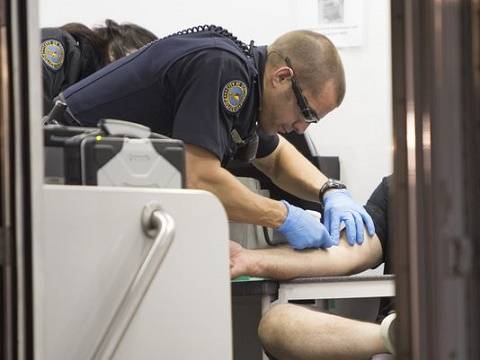
Under the implied consent law, if you are lawfully arrested for driving under the influence of an alcoholic beverage, you have the choice of whether the test shall be of your blood or breath and the officer shall advise you that you have that choice.
Officer May Have You Submit To Additional Test
If you choose to submit to a breath test, you may also be requested to submit to a blood test if the officer has reasonable cause to believe that you were driving under the influence of a drug or alcoholic beverage, and the officer has a clear indication that a blood test will reveal evidence of you being under the influence. The officer shall state in his or her report the facts upon which he bases his belief.
If Medical Attention Is Needed Prior To Tests
If you are lawfully arrested for an offense allegedly committed in violation of VC 23140, 23152, or 23153, and, because of the need for medical treatment, you are first transported to a medical facility where it is not feasible to administer a particular test of, or to obtain a particular sample of your blood, breath, or urine, you have the choice of tests available at the facility to which you have been transported. In that case, the officer shall advise you of the tests available at the medical facility and that your choice is limited to the tests available at the medical facility.
You Do NOT Have Right To Attorney During Tests

The officer shall also advise you that you do not have the right to have an attorney present before stating whether you will submit to a test or tests, before deciding which test or tests to take, or during administration of the test or tests chosen, and that, in the event of refusal to submit to a test or tests, the refusal may be used against you in a court of law.
If you are unconscious or otherwise in a condition rendering you incapable of refusal, you are deemed not to have withdrawn your consent and a test or tests may be administered whether or not you are told that your failure to submit to, or the non-completion of, the test or tests will result in the suspension or revocation of your privilege to operate a motor vehicle.
A person who is dead is deemed not to have withdrawn his or her consent and a test or tests may be administered at the direction of a police officer.
Who May Be Exempt From Blood Test
You will be exempt from a blood test if you are suffering from hemophilia. If you are suffering from a heart condition and are using an anticoagulant under the direction of a licensed physician or surgeon, you will be exempted from the blood test.
Chemical Testing Procedure In DUI Context
Understanding the DUI chemical testing procedures as outlined by California state law is vital to helping your DUI defense attorney find every possible way to attack the charges. Below is a quick overview of the proper chemical testing procedures in California.
Who Can Administer The DUI Chemical Test?
Under VC 23158, only the following persons are allowed to withdraw blood for the purpose of determining your blood alcohol content:
- A licensed physician and surgeon;
- Registered nurse;
- Licensed vocational nurse;
- Duly licensed clinical laboratory scientist or clinical laboratory bio analyst;
- A person who has been issued a “certified phlebotomy technician” certificate pursuant to Section 1246 of the Business and Professions Code;
- Unlicensed laboratory personnel regulated pursuant to Sections 1242, 1242.5, and 1246 of the Business and Professions Code; OR
- Certified paramedic acting at the request of a police officer.
This limitation does not apply to the taking of breath specimens. An emergency call for paramedic services takes precedence over a police officer’s request for a paramedic to withdraw blood for determining its alcoholic content. A certified paramedic shall not withdraw blood for this purpose unless authorized by his or her employer to do so.
Additional Test On Request
You may, at your own expense, have any of the above listed persons or any other person of your choosing administer a test in addition to any test administered at the direction of a police officer for the purpose of determining the amount of alcohol in your blood.
Who Will Have Access To Test Results?
Upon your request, full information concerning the test taken at the direction of the police officer shall be made available to you or your attorney.
Contact Wallin & Klarich Today
If you or a loved one has been charged with a DUI in Southern California, you must speak to one of our experienced DUI lawyers. Having access to the chemical blood tests is crucial to preparing the most effective defense for your case. When you retain our office, our attorneys will carefully review the results from the chemical blood or breathalyzer test you submitted to, and we will determine whether the test was adequately administered.
With offices located in Los Angeles, Sherman Oaks, Torrance, Orange County, San Diego, Riverside, San Bernardino, Ventura, West Covina and Victorville, there is an experienced Wallin & Klarich criminal defense attorney available to help you no matter where you work or live.
Call us today at (877) 4-NO-JAIL or (877) 466- 5245. We will get through this together.