

Writing a False Prescription – California Business & Professions Code Section 4324:
Writing a False Prescription - Overview:
Writing a false prescription to obtain drugs or narcotics is a serious crime in California. The law makes it a crime to write a false prescription or to have in possession of drugs that were obtained by a false prescription. The prosecution does not take this crime lightly because of the increasing public awareness of the addictiveness of prescription drugs.
California Business & Professions Code Section 4323 states that every person who, in order to obtain any drug, falsely represents himself or herself to be a physician or other person who can lawfully prescribe the drug, or falsely represents that he or she is acting on behalf of a person who can lawfully prescribe the drug, in a telephone or electronic communication with a pharmacist, shall be punished by imprisonment in the county jail for up to one year.
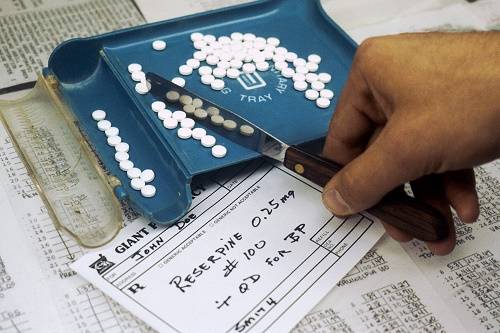
Under California Business & Professions Code Section 4324, every person who signs the name of another, or of a fictitious person, or falsely makes, alters, forges, utters, publishes, passes, or attempts to pass, as genuine, any prescription for any drugs is guilty of forgery and upon conviction thereof shall be punished by imprisonment in the state prison for up to three years, or by imprisonment in the county jail for up to one year.
It is also a crime for any person to have in his or her possession any drugs secured by a forged prescription and a conviction shall be punished by imprisonment in the state prison for up to three years, or by imprisonment in the county jail for up to one year.
Writing a False Prescription - Defenses:
Below are some of the common defenses to the crime of writing a false prescription, but the available defenses will depend on the facts of the case. Therefore, it is important that you speak with an experienced false prescription attorney to know all of your possible defenses.
Defendant never signed
The burden is on the prosecution to prove that the defendant personally signed the prescription. If the defendant has evidence to show that he could not have signed the prescription, the defendant has a defense against the charges.
Defendant had authority to sign
The defendant cannot be charged with falsely signing a prescription if the defendant had authority to sign for the prescription.
Defendant did not know he or she did not have authority to sign
It must be proven that the defendant did not know he/she did not have authority to sign the prescription. The defendant can use evidence of past prescriptions that were legally signed by the defendant to show that the defendant did not know he/she had no authority.
Defendant did not alter or forge a prescription
The defendant has a defense if the prescription has not been altered or forged by the defendant in any manner.
Defendant did not use forged prescription
If charged with using a forged prescription, the defendant has a defense if he/she can show evidence that the forged prescription was not used. However, the defendant can still be charged with altering or forging a prescription, even if he/she did not use the prescription.
Defendant did not know the prescription was forged
The defendant has a defense if the defendant can prove he/she did not know the prescription was forged when he/she used it. The defendant can also be acquitted if the prosecution cannot prove the defendant knew the prescription was forged.
Writing a False Prescription - Prosecution:
To prove that the defendant is guilty of forgery by signing a false signature, the prosecution must prove that:
1.The defendant signed (someone else’s name/ [or] a false name) to a prescription;
2.The defendant did not have authority to sign that name;
3.The defendant knew that (he/she) did not have that authority;
4.When the defendant signed the document, (he/she) intended to defraud.

To prove that the defendant is guilty of forgery by altering a prescription, the prosecution must prove that:
1.The defendant falsely made, altered, forged, or counterfeited a prescription.
2. When the defendant did that act, (he/she) intended to defraud.
To prove that the defendant is guilty of forgery committed by passing, using, or attempting/offering to use a forged prescription, the prosecution must prove that:
- The defendant passed, used, attempted, or offered to use a false/altered/forged/counterfeited prescription;
- The defendant knew that the prescription was false/altered/forged/counterfeited;
- When the defendant passed, used, attempted, offered, to use the prescription, he or she intended that it be accepted as genuine and he or she intended to defraud.
Someone intends to defraud if he or she intends to deceive another person either to cause a loss of (money[,]/ [or] goods[,]/ [or] services[,]/ [or] something [else] of value), or to cause damage to, a legal, financial, or property right.
[For the purpose of this instruction, a person includes (a governmental agency/a corporation/a business/an association/the body politic).]
[It is not necessary that anyone actually be defrauded or actually suffer a financial, legal, or property loss as a result of the defendant’s acts.]
A person alters a document if he or she adds to, erases, or changes a part of the document that affects a legal, financial, or property right.
Writing a False Prescription: Sentencing & Punishment
False Representation to Obtain Prescription Drugs over the Phone: California Business & Professions Code Section 4323
A conviction under Section 4323 will result in a misdemeanor and is punishable by imprisonment in county jail for up to one year.
Writing a False Prescription: California Business & Professions Code Section 4324(a)
Writing a false prescription is considered to be a “wobbler.” This means that the prosecution has discretion to charge the crime as a misdemeanor or a felony. A misdemeanor conviction is punishable by imprisonment in county jail for up to one year. A felony conviction is punishable by imprisonment in state prison for up to three years.
Possessing any drugs secured by forged prescription - California Business & Professions Code Section 4324(b)
Possessing any drugs secured by a forged prescription is also a “wobber.” As with writing a false prescription, a misdemeanor conviction will lead to punishment by imprisonment in county jail for up to one year. A felony conviction is punishable by imprisonment in state prison for up to three years.
Writing a False Prescription – FAQs
How does the prosecution decide whether to charge the crime as a felony or a misdemeanor?
The prosecution has full discretion on whether to charge the crime of writing a false prescription as misdemeanor or a felony. Often times, the prosecution will charge the crime as a felony to gain leverage in a plea agreement. It is important to hire an experienced false prescription attorney if you are charged with this crime. At Wallin & Klarich, we understand the prosecution’s attempts to gain leverage in a plea bargain. Our attorneys will only take a deal if you instruct us to. However, we are not afraid to take a case to trial. We will help you make an informed decision on what path to choose.
If I am convicted of possessing a drug that was secured through a forged prescription, will I be eligible for a Drug Diversion Program?
You may be eligible for a drug diversion program. Drug diversion programs are generally available to possession cases and are intended to help a person eliminate their dependency of drugs. It is critical that you speak with an attorney to see whether you may be eligible for a drug diversion program.
For the crime of false representation to obtain a prescription over the phone, under Section 4323, can I still be charged if the transaction was conducted by e-mail?
This crime can be committed by falsely representing yourself over the phone to obtain a prescription. It also applies to any electronic communication. Therefore, you can be charged if the transaction was conducted over e-mail.
How can the prosecution prove that I forged a signature?
The prosecution has many different methods on proving the fact that you forged a signature. One method is to present testimony from a witness who saw you forging the signature. Another method is to call on an expert handwriting witness to examine your previous writings with the alleged forged signature and then compare the two writings. This is why it is important to have an experienced false prescription attorney defending you.
Call Wallin & Klarich Today
If you or a loved one is charged with writing a false prescription, it is important that you speak with an experienced false prescription attorney. At Wallin & Klarich, our Southern California false prescription attorneys have over 40 years of experience. Our attorneys apply an aggressive defense and will fight to get you the best possible result in your case.

With offices located in Los Angeles, Sherman Oaks, Torrance, Orange County, San Diego, Riverside, San Bernardino, Ventura, West Covina and Victorville, there is an experienced Wallin & Klarich criminal defense attorney available to help you no matter where you work or live.
Call us today at (877) 466-5245 or contact us through our website at www.wklaw.com. We will be there when you call.