

Possession For Sale of a Controlled Substance – Health and Safety Code Section 11351
Possession For Sale of a Controlled Substance – Overview
Possession for sale of a controlled substance is a serious crime in California. If the prosecution can prove that you possessed the substance with the intent to sell it, you will face harsh penalties.
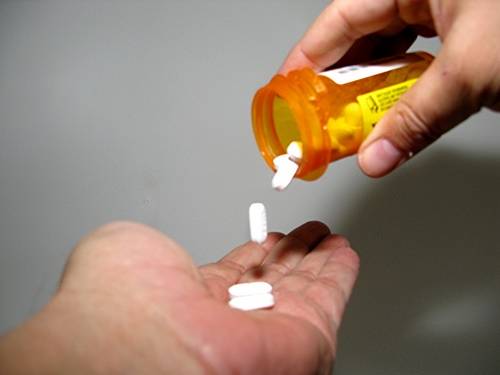
The Health and Safety Code is intended to protect the citizens of California from the dangerous effects of a wide variety of controlled substances. Possession for sale of a controlled substance is controlled by California Health and Safety Code Section 11351. Health and Safety Code Section 11351 applies to all controlled substances whether or not they are illicit drugs or prescription pills.
Many of the controlled substances are also listed on the federal controlled substances list. This means that, in addition to state charges, if convicted of possession for sale of a controlled substance, you may also face federal charges.
Conviction of possession for sale of a controlled substance could mean a prison sentence anywhere from two (2) to five (5) years and fines totaling up to ten thousand dollars ($10,000). In addition to fines and prison time, a conviction could affect your ability to get a job or even receive public benefits. See California Health and Safety Code Section 11351, 11351.5.
Possession of Controlled Substance W/ Intent to Sell (HS 11351) – Prosecution
Possession of a controlled substance for sale is covered by California Health and Safety Code section 11351. In order to convict you of this offense, the prosecution must prove the following:
- You unlawfully possessed a controlled substance AND
- You knew of its presence AND
- You knew of the substance’s nature or character as a controlled substance AND
- When you possessed the controlled substance, you intended to sell it AND\
- The controlled substance was in a usable amount
What is ‘Possession’?
In order to convict you under California Health and Safety Code section 11350, the prosecution must prove that you had possession of a controlled substance. Actual possession means you have direct and immediate control over the drug. This typically arises in situations where the substance is found on your immediate person. However, you do not have to actually hold or touch something in order to possess it. It is enough if you have personal control over the drug or share that control with another person.
This type of possession is also known as constructive possession. You can be found in constructive possession of a controlled substance if the drugs were found in an area over which you exercise control. Therefore if the controlled substance is found in your car or your home, you can be convicted of this offense.
A controlled substance is any drug or chemical whose manufacture, possession and use are regulated by the government under the United States Controlled Substances Act (USCSA). The USCSA is a federal statute that allows the federal government to regulate almost any form of narcotic that has the potential to make its way through interstate commerce. Here are few examples of certain drugs that the Legislature has deemed controlled substances:
- Heroin

You can be found in constructive possession of a controlled substance if the drugs were found in an area over which you exercise control. - Cocaine
- Ecstasy
- Hallucinogens (LSD, mushrooms, peyote)
- Opium
- Peyote
- GHB
- Prescription painkillers (codeine, hydrocodeine, morphine)
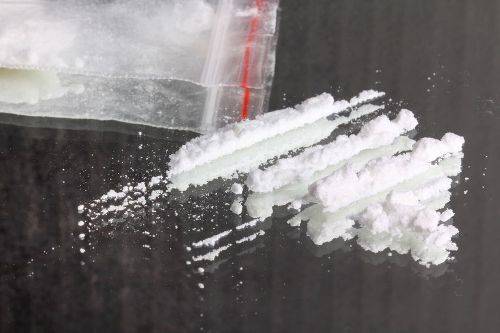
These are just a few examples of controlled substances regulated by the USCSA. In order to prove that the drug in your possession was a controlled substance, the prosecution will use laboratory tests and expert witness testimony to determine the drug’s chemical makeup. It is important to note that possession of methamphetamine for sale (CA PC 11377) and possession of marijuana for sale (CA PC 11359) are separate offenses not covered under California Penal Code section 11351.
Knowledge
In order to convict you of possession of a controlled substance for sale under California Health and Safety Code 11351, the prosecution must prove that you knew the substance’s nature or character as a controlled substance. In other words, the prosecution must prove that you knew the substance you possessed was capable of being used as a narcotic. However, the prosecution does NOT need to prove that you knew which specific substance you actually possessed.
The prosecution must also prove that you were aware of the drug’s presence. If you had no knowledge of the presence of the drug either on your person or in an area over which you exercise control, you cannot be convicted of this offense.
Usable amount
A usable amount is any quantity large enough to be used by someone as a controlled substance. Useless traces or debris are not considered “usable amounts” because they are not likely to be used in the manner prohibited by the California Health and Safety Code. However, a very small quantity can still be considered a usable amount and the quantity does NOT need to be enough, in either amount or strength, to affect your disposition upon its use.
Intent to sell
To convict you of possession of a controlled substance for sale under California Health and Safety Code section 11351, the prosecution must prove that you had the intent to sell.
Selling in this context means exchanging the controlled substance for money, services, or anything of value. The prosecution must show facts or circumstances that show you intended the sell the controlled substance rather than just possessing it for your own personal use.
Here are some common ways the prosecution can use to prove that you intended to sell:
- The amount of the controlled substance found in your possession exceeded an amount typical of personal use
- When the controlled substance was seized, you were in possession of large amounts

If the controlled substance was divided into small bags, the prosecution may use this to prove that you intended to sell. of cash in small denominations
- The controlled substance was separated into smaller amounts and placed in separate containers or bags
- The location in which you were found with the controlled substance is frequently used for drug sales
- You were in possession of scales or other weighing devices
- Many people frequent your home or residence, stopping for only a short time

Possession For Sale of a Controlled Substance (HS 11351) – Defenses
When charged with a serious crime such as possession of a controlled substance for sale in Southern California, you need an experienced drug defense lawyer that will fight for you using an effective defense strategy. There are several defenses available that could result in a dismissal or reduction of your charge.
Here are some successful defenses that our lawyers at Wallin & Klarich can raise on your behalf:
Police Officer’s Failure to Follow Constitutional Procedures
The Fourth Amendment to the United States Constitution grants you a constitutional right to be free from unreasonable searches and seizures by the government. To protect this right, the United States Supreme Court has issued a long line of decisions requiring the police to comply with certain formalities and procedures when conducting traffic stops and arrests. These formalities include possessing sufficient “probable cause” to make an arrest, reading you your Miranda rights before a police interrogation, and searching the vehicle only for evidence of the crime for which you were arrested.
If the police illegally obtained evidence by failing to follow any one of these constitutional guarantees, your defense lawyer can ask the judge to have that evidence excluded and the chances of winning your case will increase significantly.
Momentary Possession
Momentary possession of a controlled substance for an otherwise lawful purpose may be a defense to possession of a controlled substance for sale under California Health and Safety Code section 11351. In order to assert this defense you must prove:
- You possessed the controlled substance for only a momentary or transitory period AND
- You possessed the controlled substance in order to abandon, dispose of, or destroy it AND
- You did not intend to prevent law enforcement officials from obtaining the controlled substance
In order to be successful in asserting this defense, YOU must prove each of these elements by a preponderance of the evidence. This means that you must prove that it is more likely than not that each of the three listed items is true. This is a lesser burden of proof than beyond a reasonable doubt.
Lack of Control or Possession
In order to convict you of possession of a controlled substance for sale, the prosecution must prove that you had possession or control over the drug. Possession can be “actual” meaning the substance was found on your person, or it can be “constructive” meaning that the substance was found in an area over which you exercise control. Your lawyer can argue that you did not have the requisite possession or control of the drug in order to sustain a conviction against you.
It is important to know that either having access to the drugs or being near them at the time they are found, alone, are insufficient to prove possession. For example: You and your girlfriend take her car to go see a movie. On your way to the movie theater, a police officer pulls your girlfriend over for speeding. She consents to a search of the car and the officer finds a large zip-lock bag full of methamphetamine stashed in the glove box. Although you were sitting in the passenger seat and had access to the glove box, your mere presence in relation to the drug is not enough to convict of this offense without proving that you exerted some sort of control over its use.
Lack of Awareness of Knowledge
The prosecution must prove that you knew of the nature or character of the drug as a controlled substance. If you had no knowledge of the presence of the drug in your

possession or you thought that it was something else entirely and not a controlled substance, you cannot be convicted under California Health and Safety Code section 11351. Your Wallin & Klarich lawyer can argue that you lacked the requisite knowledge of the nature, character or presence of the drug and therefore cannot be found guilty of possession of a controlled substance for sale.
For example: You find a suitcase sitting on the side of a dirt road with no other person in sight. It’s a nice leather suitcase and thinking that it was abandoned by its owner, you decide to pick it up and take it home with you. On your way back home a group of police officers surround you and place you under arrest. As it turns out, the suitcase is filled with cocaine and was purposely placed on the side of the road for an undercover sting operation. Although you had actual possession of the cocaine, you had no knowledge of its presence within the suitcase because you never bothered to open it. Since you were unaware of the controlled substance’s presence, you cannot be convicted of possession of a controlled substance for sale.
Valid Prescription
You may have a defense to possession of a controlled substance for sale if you had a valid, written prescription for the substance from a physician, dentist, podiatrist, or veterinarian licensed to practice in California. It is actually the prosecution’s burden to prove beyond a reasonable doubt that you did not have a valid prescription. If you have a condition that is treated with a controlled substance, your attorney can argue that you had a valid prescription and therefore your possession of the substance was not illegal. However if you possess an amount of that controlled substance that is substantially greater than your personal medical needs, the prosecution can use this as evidence to show that you had the intent to sell.
Lack of Intent to Sell
The prosecution must prove that you intended to sell the controlled substance in order to convict you of this offense. Intent to sell can be difficult to prove because absent a confession, the prosecution will have to rely on circumstantial evidence showing that you possessed the substance for this purpose. Your attorney can argue that you did not intend to sell the drug, but only possessed it for your own personal use. If the prosecution cannot prove that you intended to sell the controlled substance, your charge can be reduced to a simple possession or dismissed in its entirety. Here are some examples of the types of circumstantial evidence the prosecution will use to prove intent to sell, and how your drug defense lawyer at Wallin & Klarich can argue against it:
- The amount of the controlled substance found in your possession exceeded an amount typical of personal use: Just because possessed a large amount of the controlled substance does not mean that you intended to sell it to another person. You could have possessed a large quantity because it is simply cheaper to buy in bulk. Or perhaps you wanted to make one purchase and stock up on the substance so that it would last longer for your own personal use.
- When the controlled substance was seized, you were in possession of large amounts of cash in small denominations: Possession of cash in small denominations is not an indication that you sold or intended to sell the controlled substance. This money could have come from any source (including your job!), and the fact that it takes the form of small denominations is a common occurrence, considering that most commercial enterprises don’t even carry bills over $20. Without actual proof showing that the money was actually derived from selling the drug, your attorney can show the jury why this argument is tenuous at best.
- The controlled substance was separated into smaller amounts and placed in separate containers or bags: Separating the substance into smaller amounts and placing it into separate containers or bags does not mean that you intended to sell these to other people. If you possess a larger amount of the controlled substance and want to carry or transport it more efficiently, it wouldn’t make sense to bring the entire amount especially when it is intended for your own personal use. We can argue that simply separating the substance into smaller amounts does not indicate the intent to sell.
- The location in which you were found with the controlled substance is frequently used for drug sales: Just because the area is common to drug sales does not mean you were engaged in this prohibited activity. If you live in the neighborhood where these activities occur or even close by, it is only inevitable that you would be travelling through that area regardless of whether you were selling drugs or not. In addition, possession of a controlled substance in an area common to drug sales would indicate that you travelled to that area in order to purchase the drug for your own personal use rather than sell it. In any case, the fact that you were found in possession of a controlled substance within a “high crime” area alone, does not indicate you intended to sell the drug.
- You were in possession of scales or other weighing devices: Scales or weighing devices can be used to measure pretty much anything (especially food) and not just drugs. Even possession of a scale for the purpose of weighing a controlled substance does not necessarily indicate the intent to sell. Possession of these devices is common for personal use to ensure that you “get what you paid for.”
- Many people frequent your home or residence, stopping for only a short time: Just because many people frequent your residence does not mean that they purchasing drugs therein. Almost everyone has friends, family and personal acquaintances that stop by there home for a variety of reasons other than purchasing drugs. Even if one of your guests is found in possession of a controlled substance after he leaves your residence, this does not mean that he obtained the substance from you or even at that location.
Possession For Sale of a Controlled Substance (HS 11351) – Sentencing
According to California Health and Safety Code section 11351, possession for sale of a controlled substance is a felony, and the punishment for sale of a controlled substance in California consists of 2, 3, or 4 years in county jail and a maximum $20,000 fine. Our drug crime lawyers at Wallin & Klarich have over 40 years of experience in aggressively defending clients facing all types of drug charges in Southern California.
Court options at the time of sentencing
If you are convicted of possession of a controlled substance for sale, the court has discretion in determining your punishment depending upon the circumstances of your case. The court has the following options at time of sentencing:
- The court can sentence you to 2, 3 or 4 years in county jail

Your punishment is highly dependent on the particular factors of your case.

- Place you on probation and impose a sentence of up to one year in county jail
- Place you on probation with no jail time, but order you to do community service, a work release program and attend drug counseling or substance abuse classes
- Place you on formal probation and assign you a probation officer
Probation terms
When you are placed on probation the court will impose specific terms of probation that apply to the crime for which you were convicted. These terms of probation will include:
- Violate no law (other than a traffic infraction)
- Visit your probation officer as often as required by your probation terms
- Perform community service
- Random drug testing
These are only a few of the probation terms that a court can impose. If you are found to be in violation of any of these terms, the court can sentence you to the maximum time allowed by law. Thus, you need the guidance of a professional team experienced in handling possession for sale cases in California.
Possession For Sale of a Controlled Substance (HS 11351) – Client Testimonials
“Attorney Matt Wallin, a simple thank you can’t possibly express how much I appreciated your hard work, professionalism and unwavering dedication to my case. I was accused of felony drug possession and driving while on a suspended license. I knew the district attorney was pushing for 3 years state prison because of the seriousness of the offenses and my prior criminal record. You first explained to me my rights and protections under the constitution, particularly the Fourth Amendment and how these rights applied to my case. The motion to suppress evidence you drafted was powerful and well-written. The judge and district attorney must have agreed because BOTH CHARGES WERE DISMISSED. Words cannot express the appreciation and relief I felt being able to walk freely out of the courthouse with my Mom and kids. This is all thanks to Attorney Matt Wallin’s dedication and understanding of the law. I would highly recommend the legal services of Attorney Matt Wallin to anyone who wants an attorney there every step of the way, fighting to protect their rights and freedom.”
-RJ
“When we needed a law firm to assist our daughter who was facing a serious drug offense we didn’t know where to turn. I wanted to take time to thank you Senior Attorney Paul Wallin, and all the staff at Wallin & Klarich Law Firm for your support and assistance during a difficult time affecting the Cast family. Good to know that the Cast family has a group of professionals available whose resources are dispensed in a timely manner. Thanks to all, this has been a successful mission; you have done an excellent job. Would highly recommend, utilize your services in the future.”
-J.C.
“I want to thank you for your excellent representation in my probation violation matter. When I called your office for advice, I was facing almost guaranteed jail time on probation violations for my drug possession convection. When my attorney from Wallin & Klarich spoke on my behalf at the probation violation hearing it resulted in me being able to voluntary enter a drug treatment program rather than taken to jail. The judge actually said that if it had not been for my attorney and his arguments, I would have gone to jail that day. Thank you Wallin & Klarich for representing me, keeping me out of jail, and helping me to get my life back on track.”
-S.W
Possession For Sale of a Controlled Substance (HS 11351) – FAQs
The professional defense team of drug crime attorneys at Wallin & Klarich provide answers to the most commonly asked questions about Health and Safety Code 11351 in California.
Can I be convicted of possession of a controlled substance for sale if I was not aware of the drug’s presence?
No. In order to convict you of possession of a controlled substance for sale under California Health and Safety Code section 11351, the prosecution must prove that you knew of the presence of the drug while it was in your possession. If you had no knowledge of the drug’s presence you cannot be convicted of this offense.
For example: You borrow your friend’s car to go to work and are pulled over for speeding. The officer asks permission to search the trunk and you consent to his request. During the search, the officer finds a small backpack with several pounds of heroin therein. Although you were in constructive possession of the heroin because you had control over the vehicle in which it was located, you cannot be convicted of possession of controlled substance for sale because you were not aware of the substance’s presence in the vehicle.
If I had possession of a controlled substance but it was for personal use, can I still be charged with possession for sale?
Unfortunately, it is possible to be charged with possession of a controlled substance for

sale even if you possessed the substance for your own personal use. The prosecution may choose to charge you with possession of a controlled substance for sale if there are facts indicating that you had the intent to sell. When making this decision, the prosecution will consider the amount of the controlled substance found in your possession, whether packaging materials such as small baggies or containers were present, if large sums of cash were present or whether drug paraphernalia such as a pipe was found.
For example, if a large amount of individually packaged methamphetamine was seized, the prosecution is likely to file the intent to sell charge. On the other hand if a small amount of the substance was found along with a pipe or smoking device, these facts indicate that you possessed the drug for personal use.
Can I be convicted of possession of a controlled substance for sale if the substance was a prescription medication?
Yes. Possession of a controlled substance for sale not only includes illegal narcotics such as heroin or cocaine, but it can also encompass a wide variety of legal prescription drugs. If you are found to be in possession of prescription medication and do not have a valid prescription from a licensed doctor, your possession of the drugs is considered illegal and you can be convicted under Health and Safety Code section 11351 if the jury finds that you intended to sell the substance to another.
If the drugs were found in my car and not on my person, can I still be convicted of possession of a controlled substance for sale?
Yes. In order to be convicted of possession of a controlled substance for sale, you do not actually need to be holding or touching the drug to be found in possession of it. Constructive possession exists when the drug is found in an area over which you exercise control. Therefore if the substance is found in your car, bedroom or any other area which you are likely to exert control, you can be convicted of possession for sale even though the drugs were not found on your person.
Call Wallin & Klarich Today
Having an experienced drug defense attorney can help you receive a lesser charge. Your lawyer can negotiate with the prosecution and highlight any weaknesses in their case. The prosecution may fear losing in trial and offer a lesser charge. In most possession of a controlled substance for sale cases, the lesser charge would be simple possession of a controlled substance under California Health and Safety Code Section 11350. This offense is punishable by 16 months, 2 or 3 years in county jail rather than a possession for sale conviction which could result in 2, 3, or 4 years in state prison
With offices in Los Angeles, Sherman Oaks, Torrance, Tustin, San Diego, Riverside, San Bernardino, Ventura, West Covina, and Victorville, there is an experienced Wallin & Klarich criminal attorney available near you no matter where you work or live. Drawing from our extensive years of experience, we are available to answer any questions you have and are willing to go the extra mile in your defense.
Call our offices today at (877) 4-NO-JAIL (466-5245). We will get through this together.
