

Military Criminal Defense: Court-Martial
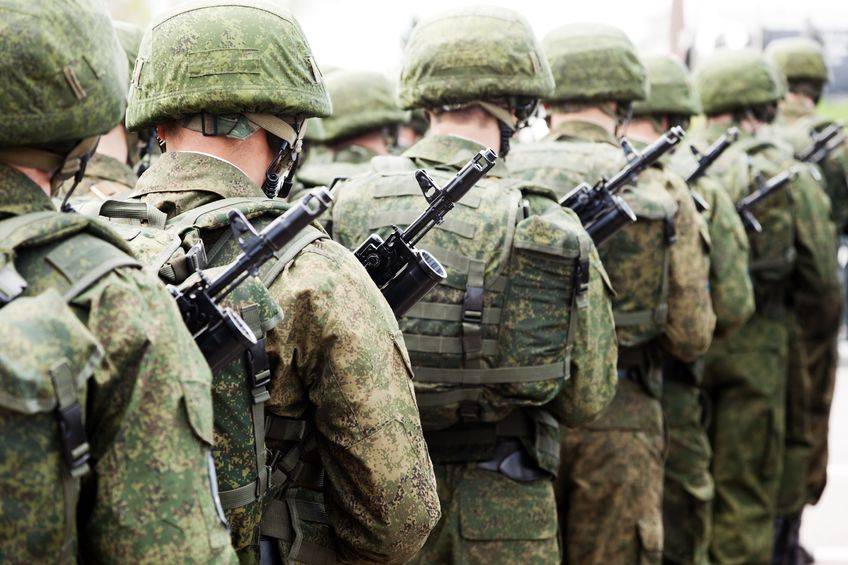
The criminal justice system for military members is different than that of civilians. First, if you are a member of the military, you are subject to a special set of laws known as the Uniform Code of Military Justice (UCMJ).1 This set of laws codifies a number of crimes that you can be charged with, and only applies to military personnel – including some reservists, members of the National Guard, and retired personnel. It also includes prisoners of war, and certain civilians, such as those who are assigned to serve with the armed forces by virtue of their work for agencies such as the National Oceanic and Atmospheric Administration (NOAA), Public Health Service, and other organizations.
The UCMJ has a global reach, which means that, regardless of where the crime is committed, you can be punished under the Code’s provisions. Some of these crimes include:
- Absence without leave (AWOL);
- Desertion;
- Dereliction of duty;
- Assaulting or willfully disobeying a superior commissioned officer;
- Conduct unbecoming of an officer; or
- Misbehavior as a sentinel or lookout.
In addition to these crimes, you can be punished for “civilian” crimes, such as robbery, rape, murder, and so forth. However, unlike civilians, you are subject to a trial process that is known as a “court-martial”.
How a Military Case Begins
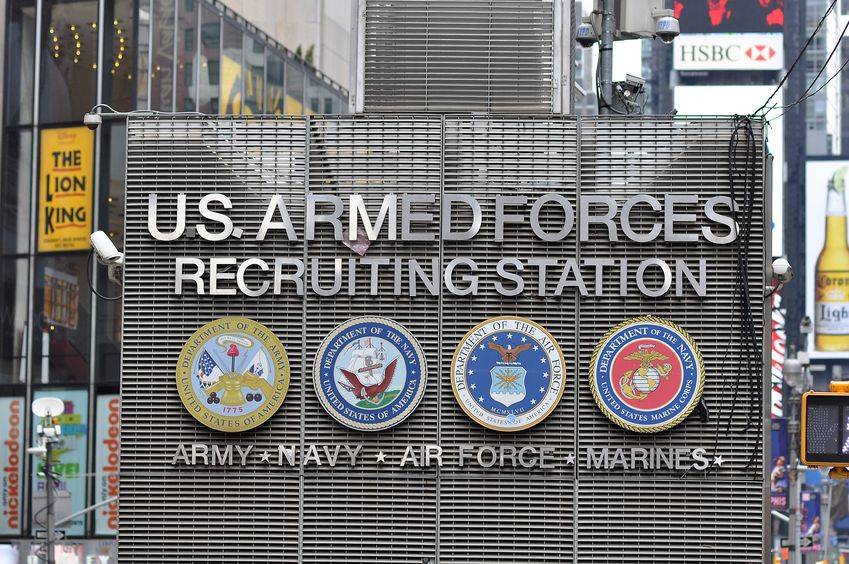
A criminal case in the military begins with an investigation by the commanding officer after he or she becomes aware of a possible violation of the UCMJ by a service member under his or her command. If the commanding officer has probable cause to believe that you violated the UCMJ, you can be arrested and held in custody for up to 72 hours while the commanding officer decides how to proceed.
The commanding officer can then choose to proceed with a court-martial within 120 days of your arrest, or to inflict a "non-judicial" punishment instead, such as restricted duty or barracks confinement for a short period. You may appeal the commanding officer's designated punishment if you believe that the punishment is unjust. Like a civilian case, your attorney can make an agreement with the prosecuting attorney prior to trial for a reduced punishment in exchange for a guilty plea.
The court-martial process begins with the “preferring” of the charges, during which you will be read the charges against you in the presence of a commanding officer and a neutral third officer. Depending on the type of court-martial (see below), your attorney and the prosecution in your case may be assigned. Additionally, a judge may be appointed to preside over your case. If there is a “jury,” it will be comprised of a group of court members, usually commissioned officers and service members.
Types of Courts-Martial
There are three types of courts-martial under the UCMJ. They are:
- Summary Court-Martial
A summary court-martial is typically held if you are being charged with a petty, less severe crime. This court process does not require a military judge or an attorney. Rather, the trial is conducted by a commissioned officer. He or she will review the facts of your case, the legal precedent, and the sentencing guidelines.
If you are found guilty in a summary court-martial, you face one or more of the following:
- Confinement for up to 30 days;
- A maximum of 45 days of hard labor;
- Restriction to a particular area (such as the barracks) for up to 60 days;
- Pay reduction for one month; or
- Loss of rank.2
- Special Court-Martial

The special court-martial is the military equivalent of a trial for a misdemeanor crime in a civilian court. A military judge presides over special courts-martial. If you are prosecuted in a special court-martial, you are assigned a military attorney, but you may hire a private defense attorney. A panel of three service members will decide the case, unless you specifically request for a judge to do so.
If you are convicted of a military crime in a special court-martial, you face:
- A maximum of 364 days of confinement;
- Forfeiture of up to six months pay;
- Three months of hard labor; or
- Misconduct discharge.3
- General Court-Martial
The general court-martial is reserved for the most serious offenses. In a general court-martial, a military judge presides over your case, and you are assigned a military attorney. The trial is held before a panel of at least five court members. However, if you are facing the possibility of death penalty, the trial must be held before a panel of at least 10 court members. As with a special court-martial, you may request that a judge decide the verdict, except in cases where the prosecution seeks the death penalty.
Under a general court-martial, you face the maximum sentence allowed by UCMJ, including:
- Death;
- Life imprisonment; or
- Dishonorable discharge.4
Frequently Asked Questions on Military Crimes
- I am a member of the armed forces and I am facing a court-martial. Can I hire my own attorney?
Yes. Much like a civilian case, a service member is entitled to be represented by private counsel. The court-martial will appoint a military lawyer to your case, but you should hire a private defense attorney. Your private attorney need not have served in the military to represent you in a court-martial.
- Why should I hire a private defense attorney for my military case?
Similar to a public defender, a military lawyer that is assigned to your case might have several cases proceeding one time. He or she may not be able to spend the time to become invested in your defense. The attorney that the military appoints to you is a member of the military. He must abide by certain rules when defending you that a private attorney does not have to follow. In addition it often is the case that the military lawyer that is assigned to defend you will have difficulty taking strong positions on your behalf for fear of reprisal from his superiors. However, a skilled private attorney will work to protect your interests, and get you the best possible result in your case.
- Can a military conviction affect my life after the military?
Yes. Your sentence may include a misconduct or dishonorable discharge, which can follow you when you leave the military. A discharge for misconduct will require your case to be reviewed by the Veteran’s Administration to determine whether you are entitled to any veteran’s benefits. A dishonorable discharge will result in the loss of all military benefits. Both types of discharges will act as a conviction on your civilian criminal record, and could become an obstacle to future employment.
Contact the Attorneys at Wallin & Klarich to Defend You in a Court-Martial

If you have been charged with a military crime and are facing a court-martial, you need to hire a private defense attorney who is experienced in handling military criminal defense. At Wallin & Klarich, our attorneys have over 40 years of experience successfully defending those facing criminal charges, including the brave men and women of the United States Armed Services. Contact us today for a free, no obligation, phone consultation.
With office locations in Los Angeles, Sherman Oaks, Torrance, Tustin, San Diego, Riverside, San Bernardino, Ventura, West Covina and Victorville, there is a Wallin & Klarich attorney experienced in California criminal defense near you, no matter where you work or live.
Call us today at (877) 4-NO-JAIL or (877) 466-5245 for a free phone consultation. We will get through this together.
1. See 10 U.S.C. §§ 801–946↩
2. See MANUAL FOR COURTS-MARTIAL, UNITED STATES pt. XIII, ¶ 1301 (2012) [hereinafter MCM].↩
3. See generally MCM, supra note 2.↩
4. Id.↩