

13 Successful Defenses To Driving Under The Influence Charges In California
Have You Been Arrested For A DUI In Southern California?
There are a number of DUI defenses that an experienced Wallin & Klarich attorney can raise to help you get the best possible result in your DUI case. Our team of DUI lawyers have over 40 years of experience defending clients accused of all types of criminal and DUI charges.
We understand the stress and uncertainty you are going through right now, and we are ready to help you prepare the best defense strategy for your case. Below are 13 strong defenses to DUI charges that you should be aware of if you have been charged with driving under the influence in California. If you need immediate assistance from one of our lawyers, or if you have any questions about your case, please speak to us today at (877) 466-5245.
Defense 1: You Were Not Driving A Vehicle
A common defense to a DUI charge is that you were not driving the vehicle. If charged with a DUI, the prosecutor must prove that you were driving the vehicle. If the prosecutor cannot prove that you were driving, the charges will likely be dismissed or you will be acquitted of the charges at trial.
Defense 2: You Were Not Under The Influence
If charged with a DUI under VC 23152(a), the prosecutor must prove that you were “under the influence.” A rebuttable presumption exists that you were not under the influence if your BAC was less than 0.05 percent. (People v. Gallardo (1994) 22 Cal.App.4th 489, 496). This means that if your BAC was lower than 0.05%, the prosecutor must use evidence outside of your BAC to prove that you were under the influence. This makes it more burdensome to prove that you were actually “under the influence” under VC 23152(a).
Defense 3: Your BAC Was Under 0.08%
If you are charged with a DUI under VC 23152(b), the prosecutor must prove that your BAC was 0.08% or higher. If the results from a chemical test show that your BAC was lower than 0.08%, you can use this evidence as a defense to the charge. You can also cite this evidence at your DMV hearing in order to avoid having your driver’s license suspended.
Defense 4: Reasonable Suspicion / Probable Cause
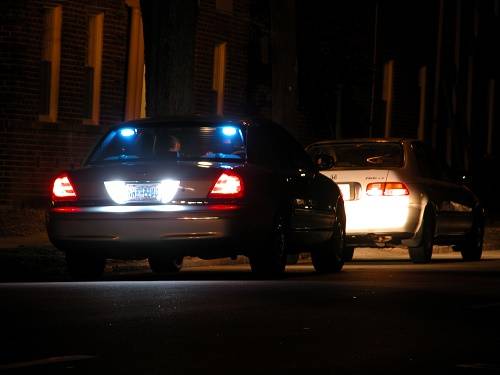
If the original traffic stop was made without reasonable suspicion, it is unlawful and any evidence that resulted from the stop must be suppressed. This means that if the officer did not have a lawful reason (e.g. vehicle code violation) to pull you over, your case may be dismissed since the prosecutor will face a significant burden in convicting you without this evidence.
While reasonable suspicion may suffice for a traffic stop, you may not be arrested if there was a lack of probable cause. In other words, are the facts and circumstances within the officer's knowledge sufficient to warrant a prudent person to believe that you have committed, are committing, or are about to commit a crime? Your Wallin & Klarich attorney can argue that the police officer lacked probable cause and, thus, wrongly arrested you.
You may have all evidence resulting from the traffic stop suppressed if the police officer lacked reasonable suspicion to pull you over or probable cause to arrest you. Your Wallin & Klarich attorney can file a 1538.5 motion to suppress all evidence resulting from the traffic stop in order to help you defeat a DUI charge. If the evidence is suppressed, the prosecutor may face considerable difficulty in convicting you of a DUI. This may lead to reduced charges or a complete dismissal of the case against you.
Defense 5: Unconstitutional Checkpoint
An officer may not stop your vehicle or arrest you for failing to stop at a DUI checkpoint. You may choose to avoid the checkpoint by driving in a different direction as long as you do not commit a traffic violation in the process or display signs of obvious intoxication.
Defense 6: Alternative Explanations For Faulty Driving
Your DUI defense attorney can disprove the accusation that you were under the influence by showing alternative explanations for your faulty driving. The majority of traffic violations are committed by sober people. For example, current research shows no link between drunk driving and speeding. An experienced DUI lawyer understands how to elicit favorable testimony from an officer in order to highlight all of the ways in which you drove properly.
Defense 7: Alternative Explanations For Objective Symptoms Of Intoxication
There are often innocent explanations for the signs of intoxication noted in the police report (e.g. blood shot/watery eyes, slurred speech, nervousness). Such alternative explanations include: allergies, fatigue, eye irritation, embarrassment, frustration, or nerves. In addition, an argument can be made that the odor of alcohol, standing alone, cannot prove impairment for purposes of driving under the influence.
Defense 8: Emergency Doctrine
The prosecutor may not convict you of a DUI if you did not commit an illegal act or neglect to perform a legal duty. You may be released from criminal liability under VC 23152 if you can show that your actions were forced by a sudden, imminent emergency situation. The emergency doctrine is measured by an objective standard- would a reasonable person demonstrating ordinary care have acted in the same manner? If so, you may not be convicted of a DUI under VC 23152. You do not need to take the safest course of action as long as your actions are deemed reasonable by this objective standard.
Defense 9: Faulty Testing Procedures
Breathalyzer tests are inaccurate and prone to several mistakes. The results of a chemical test can be challenged if the testing procedures were not properly administered or if the agency maintaining the testing device did not follow regulations. The breathalyzers must be constantly re-calibrated to obtain the most accurate results and can still be faulty even when properly calibrated. An experienced DUI attorney can help you achieve the best possible outcome in your case by scrutinizing the breathalyzer tests.
Defense 10: Rising BAC Defense
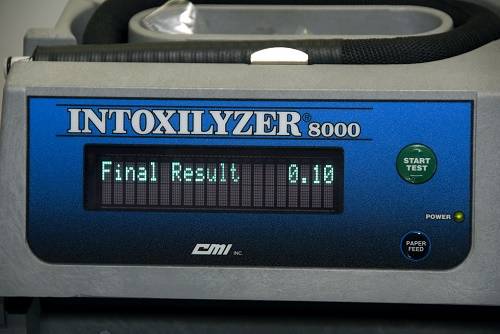
A DUI defense attorney can use the “rising BAC defense” when your BAC is close to 0.08% and your last drink was consumed fairly close in time to when you were pulled over. Alcohol takes time to metabolize in your body. Taking a shot of alcohol will not immediately put you over the legal limit. Your BAC will start at 0.00% and will gradually rise as your blood metabolizes the alcohol.
Your attorney can argue that your BAC was not over the legal limit when you drove the vehicle. For example, imagine that you were pulled over on suspicion of a DUI. You failed the field sobriety test, were arrested, and taken to the police station to have a blood test conducted. The blood test showed that your BAC was at 0.09%. The blood test was taken an hour after you were originally pulled over. If you had your last drink just before getting pulled over, you may argue that your BAC was still on the rise. You may argue that your BAC was 0.07% or below at the time of driving, and that it eventually rose to 0.09% within that hour it took to take the blood test.
This would be a viable defense because the BAC must be 0.08% or higher when you drove the vehicle and not when the blood test was taken.
Defense 11: Mouth Alcohol
“Mouth Alcohol” can be used as a defense to prove that the breathalyzer reading was inaccurate. Did the mouth alcohol contaminate the breath test results? Breath alcohol test results can be skewed by latent oral alcohol caused by burping, belching, or by cough syrup and cold medicines, breath sprays, mouthwash, dentures and adhesives, braces, trapped food between the teeth, orthodontics, and more.
Defense 12: Inaccurate Field Sobriety Testing Methods
Often times, DUI suspects, such as the elderly or those suffering from a medical condition, cannot be fairly evaluated using standard field sobriety testing methods. Did the officer administer the tests in full compliance with the requirements set out by the National Highway Traffic Safety Administration
Were the tests administered on a flat surface away from passing traffic? If the test was administered on an uneven surface, on rocky or slippery terrain, in the presence of heavy traffic, in windy or rainy conditions, or if the suspect was wearing constricting shoes or high heels, there is a good chance that these factors negatively affected the test results.
Defense 13: Miranda Rights
Any incriminating statements you make to a police officer may be suppressed if the officer did not properly give you your Miranda Warning (e.g. right to remain silent). A police officer must give you this warning when you have already been arrested and are being interrogated by law enforcement personnel.
Call Wallin & Klarich Today
With over 40 years of experience successfully defending clients accused of driving under the influence charges in California, our team of DUI lawyers at Wallin & Klarich is ready to help you and provide you with the effective defense that you need during this difficult time.
With offices located in Los Angeles, Sherman Oaks, Torrance, Orange County, San Diego, Riverside, San Bernardino, Ventura, West Covina and Victorville, there is an experienced Wallin & Klarich criminal defense attorney available to help you no matter where you work or live.
Call us today at(877) 4-NO-JAIL or (877) 466-5245 for your free phone consultation.