

California Reckless Driving Laws – California Vehicle Code 23103 VC
What You Need to Know About Reckless Driving Charges – California Vehicle Code 23103
The California Vehicle Code 23103 defines reckless driving as driving a vehicle “in willful or wanton disregard for the safety of persons or property.” You can be charged with reckless driving on public roads or in a public or private parking facility. A reckless driving charge can, and often does, come along with other criminal charges stemming from the same incident.
Consequences of Reckless Driving
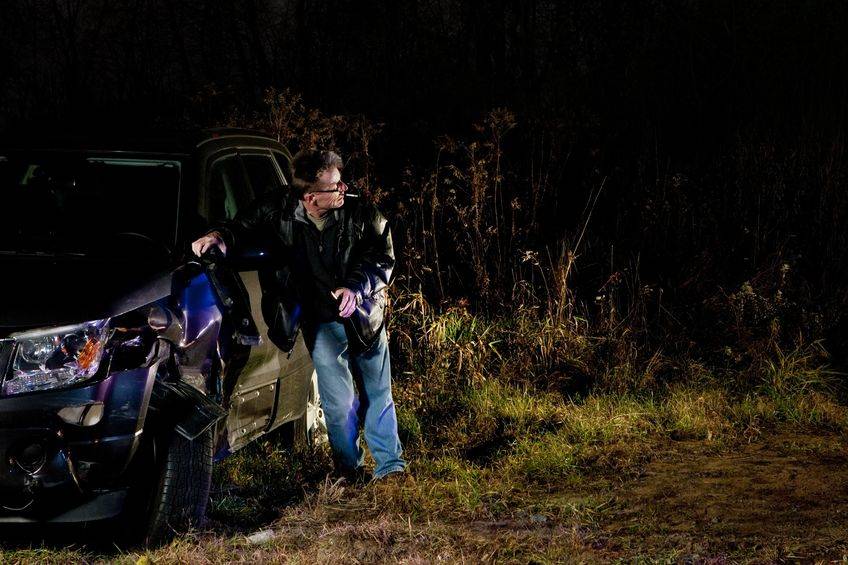
Reckless driving may sound minor, but the consequences can be much more serious than the consequences of an infraction such as a speeding ticket. Under California Vehicle Code 23103, reckless driving is a misdemeanor charge carrying imprisonment for five to 90 days, a fine of $145 to $1,000, or both. If someone was hurt or killed as a result of the reckless driving, or if you have a prior reckless driving conviction on your record, those penalties can increase. In addition, the DMV will put two points on your driver’s license and may count a conviction against you in any future license suspension hearing or other legal proceeding. Your automobile insurance may be cancelled or the premium dramatically increased after a conviction for reckless driving.
Prosecution of California Vehicle Code 23103 Charges
To prove the defendant is guilty of reckless driving under Vehicle Code 23103, the prosecution must prove that:
- The defendant drove a vehicle (on a highway/in an off street parking facility);AND
- The defendant intentionally drove with wanton disregard for the safety of persons or property.
A person acts with wanton disregard for safety when (1) he or she is aware that his or her actions present a substantial and unjustifiable risk of harm, and (2) he or she intentionally ignores that risk. The person does not, however, have to intend to cause damage.
Reckless Driving Causing Bodily Injury Prosecution California Vehicle Code 23104
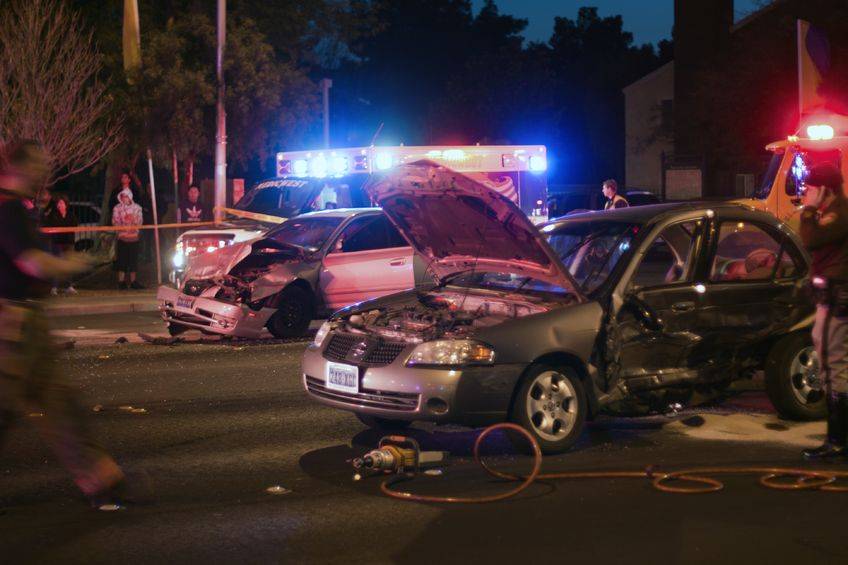
To prove that the defendant is guilty of this crime under Vehicle Code 23104, the People must prove that:
1. The defendant drove a vehicle (on a highway/in an off-street parking facility);
2. The defendant intentionally drove with wanton disregard for the safety of persons or property; AND
3. Proximately causes bodily injury to a person other than the driver.
A person acts with wanton disregard for safety when (1) he or she is aware that his or her actions present a substantial and unjustifiable risk of harm, and (2) he or she intentionally ignores that risk. The person does not, however, have to intend to cause damage.
The term highway describes any area publicly maintained and open to the public for purposes of vehicular travel, and includes a street.
An off-street parking facility is an off-street facility open for use by the public for parking vehicles. It includes a facility open to retail customers, where no fee is charged for parking.
Examples of when the court found that the defendant DID NOT commit reckless driving:
A pedestrian was crossing a highway and waving a fishing pole at the driver to get his attention. The driver did not slow down. The pedestrian shouted something at the driver as he drove by. The driver made a U turn and drove towards the pedestrian. The pedestrian had to jump out of the way thinking he would get hit. The defendant stopped where the pedestrian was standing and then put his car in reverse and left 10 feet of skid marks before turning his car around and driving off. The court found that this may have constituted negligence on the part of the driver, but it did not constitute a wanton disregard for safety of others. See People v. Allison (1951) 101 Cal.App.2d Supp. 932, 935.
Defendant’s car collided with a second car which had stopped and then backed up to permit another driver to make a turn at an intersection. There was no evidence that, before defendant tried to stop, he saw the other car and knew that the driver intended to back up, or that defendants speed was illegal. The most that could be said was that defendant perhaps failed to keep a proper lookout ahead and for that reason may have been negligent. Gross negligence is insufficient, by itself, to be considered reckless driving. See People v. McNutt (1940) 40 Cal.App.2d Supp. 835, 838-839.
Example of when the court found that the defendant DID commit reckless driving:
The court found that the defendant was guilty of reckless driving after a California Highway Patrol officer pursued the defendant for 4.3 miles at 7:45 p.m., during which chase the defendant drove at the rate of 75 to 80 miles an hour across intersections and passed nine cars. He passed approximately 12 more cars at a rate of speed varying from 75 to 85 miles per hour. The court looked at the surrounding circumstances to determine that speeding constituted reckless driving in this case. See People v. Nowell (1941) 45 Cal.App.2d Supp. 811, 813a, 814.
Reckless Driving Defenses Under California Vehicle Code 23103 VC

Having an experienced reckless driving attorney defending you can help you with raising valid legal defenses when you are facing a reckless driving charge under Vehicle Code 23103. Below are a few to consider.
You Did Not Drive
The prosecution must prove that the defendant was driving the vehicle. You can raise a defense if you were not the driver of the vehicle. Our aggressive criminal defense attorneys can also attack any weak evidence that the prosecution may have against you. If the prosecution cannot prove that the defendant was driving, the charges will likely be dismissed or the defendant will be acquitted of the charges at trial.
You Drove Recklessly Out of Necessity
Another defense that might be raised in a reckless driving case is the necessity defense. Here, the defendant must show that:
- The offensive driving took place because the driver reasonably believed that an emergency existed;
- The driver did not create the emergency; and
- The emergency presented a threat to the driver or some third party.
Speeding by Itself Does Not Constitute Reckless Driving
The fact that you were speeding, by itself, does not establish that you drove with wanton disregard for safety. It is only one factor the jury must consider out of all the surrounding circumstances. If this is the only evidence that the prosecution has against you, an experienced attorney will highlight this fact to defend you against your charges.
The court has stated that speeding can constitute reckless driving after considering the time, place, person, and surround circumstances. See Hall v. Mazzei, (1936) 14 Cal. App. 2d 48 [57 P.2d 948, 950].
Sentencing & Punishment for a Reckless Driving Conviction Under California Vehicle Code 23103
A conviction for reckless driving under Vehicle Code 23103 is a misdemeanor and is punishable by imprisonment in a county jail for five days to 90 days, or by a fine of one hundred forty-five dollars ($145) to one thousand dollars ($1,000), or by both that fine and imprisonment.
Reckless Driving: Bodily Injury: California Vehicle Code 23104
Under Vehicle Code 23104, reckless driving which causes bodily injury is a serious crime punishable as a misdemeanor. Reckless driving, as defined in California, is any willful or wanton disregard for the safety of persons or property while operating a commuter vehicle. This law defines a bodily injury as a physical injury which requires professional medical treatment. The punishments are increased if reckless driving causes great bodily injury, which is defined as a significant or substantial physical injury. Most importantly, if you were under the influence of drugs or alcohol and driving recklessly, you will face additional penalty enhancements.
Most importantly, not only will the Courts take action, but the DMV may have a hearing to determine whether or not you can retain your privilege to drive. Usually, DMV can suspend or completely revoke any driving privileges due to unsafe driving or if someone has been charged with a crime involving their vehicle.
Violation Point Count California Vehicle Code Section 12810
Under California Vehicle Code Section 12810(c), a conviction of reckless driving shall be given a value of two points.
Negligent Operator: Violation Points California Vehicle Code Section 12810.5
Under California Vehicle Code Section 12810.5, the DMV may suspend and place on probation, or revoke, the driving privilege of a negligent operator.
A negligent operator with a Class C license will have his/her driving privileges taken away if he/she receives:
- 4 or more points in 12 months,
- 6 points in 24 months, or
- 8 points in 36 months.
Can I have my charge of reckless driving reduced from a misdemeanor to an infraction?
Unfortunately, reckless driving is a misdemeanor under Vehicle Code 23103 and may not be reduced to an infraction. See People v. Dibacco (2004) 117 Cal.App.4th Supp. 1, 4 [12 Cal.Rptr.3d 258].
How Many Points Is Reckless Driving?
For reckless driving, the DMV will put two points on your driver’s license and may count a conviction against you in any future license suspension hearing or other legal proceeding. This is important because if you exceed a certain number of points, you may end up losing your driving privileges. Additionally, having more points on your driving record will increase your insurance premiums for the next 3 to 5 years. In California, your driver’s license can be suspended or revoked if you have:
- 4 points in 12 months
- 6 points in 24 months
- 8 points in 36 months
Frequently Asked Questions on Reckless Driving – Vehicle Code 23103
At Wallin & Klarich, we commonly receive questions from clients regarding reckless driving cases (Vehicle Code 23103). Some of these include:
When a person is accused of reckless driving under Vehicle Code 23103, can the prosecutor also accuse him of other related offenses?
Yes. When a person is accused of reckless driving, very often the prosecution will also add other criminal charges in the same complaint against you. Other charges that can be charged in addition to the reckless driving charge include DUI under California Vehicle Code Section 23152 or 23153, hit-and-run under California Vehicle Code Section 20001-20002, speeding under California Vehicle Code Section 22348-22352, exhibition of speed (street racing) under California Vehicle Code Section 23109(c), and speed contest (street racing causing injury) under California Vehicle Code Section 23109(e)-(f). It is important that you speak with an experienced criminal defense attorney as soon as possible to help you defend against these charges and limit the exposure you may be facing.
If I am arrested for reckless driving, can the police impound my car?
Under California Vehicle Code Section 23109.2, a police officer can impound your car for up to 30 days if you are arrestedfor reckless driving. You will be responsible for any fees that are assessed to the impounding of your vehicle.
I received the first points on my driving record from a reckless driving conviction under Vehicle Code 23103. The DMV did not suspend my license, but the court suspended it for up to 30 days. Can the court do that?
Under California Vehicle Code Section 13200, even though the DMV did not suspend your license, the court may suspend your driving privileges for up to 30 days upon the first conviction of reckless driving. Upon a second conviction of reckless driving, the court can suspend your driving privilege for up to 60 days. Upon a third or subsequent reckless driving conviction, the court can suspend your driving privileges for up to six months.
Can I be convicted of reckless driving if I am on private property?
Yes. Reckless driving can also apply to off-street parking facilities. An off-street parking facility is a parking facility open for use by the public for parking vehicles. It includes a facility open to retail customers, where no fee is charged for parking. In other words, any parking lot that is open to the public.
Call Wallin & Klarich Today
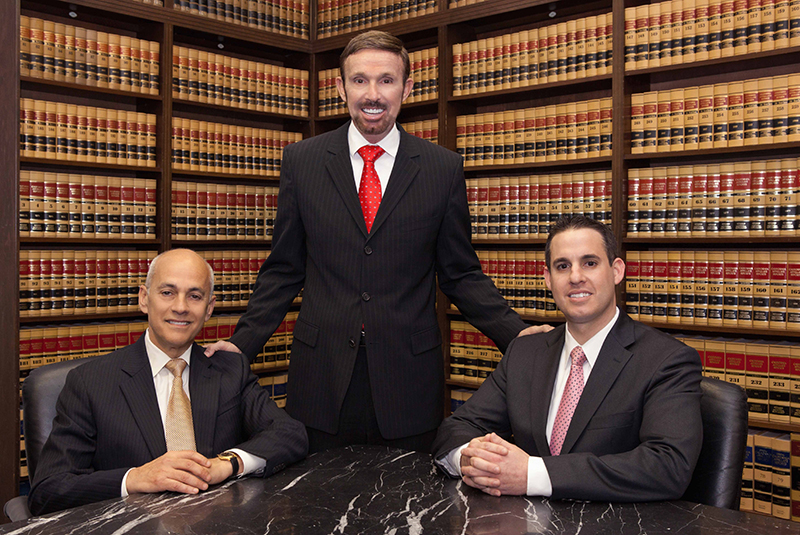
If you are accused of reckless driving, you could be facing jail time and points on your driving record that could impact your ability to keep your driver’s license. That is why you should contact an experienced reckless driving attorney immediately.
Wallin & Klarich has been very successful at defending our clients who find themselves accused of reckless driving. With more than 40 years of experience successfully defending our clients facing reckless driving charges, we know, for example, that speeding by itself is not enough to convict you of reckless driving under Vehicle Code 23103. It is critical to consult with one of your highly skilled California reckless driving defense lawyers if you find yourself accused of reckless driving or any other vehicle code infraction that can impact your driving record.
Call us today at (877) 4-NO-JAIL or (877) 466-5245 for a free phone consultation regarding your case. We will get through this together.
