

11 Defenses To DUI Causing Injury Charges By Orange County DUI Lawyers
Are You Being Charged With DUI Causing Injury In Southern California?
If you are facing charges for DUI causing injury in Southern California, you can be assured that you are now in good hands. Wallin & Klarich’s team of Orange County DUI lawyers has prepared a summary of 11 defenses to DUI causing injury charges in California that, in our experience, have proven to be the most successful. We encourage you to let us guide you through difficult process because your future and your freedom are at stake right now.
For over 40 years, our team of DUI attorneys has defended clients facing charges for DUI causing injury in Southern California. We understand how the prosecution handles these types of cases, and we are able to provide you with the effective defense strategy you need if you are being accused of causing injury to another person while driving under the influence of alcohol or drugs.
1. You Were Not Driving The Vehicle At The Time Of The Incident
The prosecutor may not convict you of a DUI causing injury if you did not drive a vehicle. When you retain an Orange County DUI attorney from Wallin & Klarich, we will defend you against this charge by proving that you were not operating the vehicle at the time of the alleged incident.
2. You Were Not Under The Influence
You may not be convicted of a DUI causing injury if you were not “under the influence” when you drove the vehicle. If your BAC was less than 0.05% when you drove the vehicle, the prosecutor must use evidence besides your BAC to prove that you were “under the influence.” This evidence may include the arresting officer’s testimony detailing your alleged bloodshot eyes, slurred speech, the smell of alcohol on your breath and other symptoms of intoxication. A skilled Orange County DUI lawyer at Wallin & Klarich can refute this evidence by providing alternative reasons for the aforementioned symptoms.
3. Your BAC Under 0.08%

To convict you under VC 23153(b), the prosecutor must show that your BAC was 0.08% or greater when you drove the vehicle. A chemical test may indicate that your BAC was under 0.08% at the time of driving. You may use this evidence as a defense at the DMV hearing.
4. Emergency Doctrine
To convict you of a DUI causing injury, the prosecutor must prove that you committed an illegal act or neglected to perform a legal duty. If your actions were forced by a sudden, imminent emergency situation, you may have a complete defense against a VC 23153 charge. Your actions will be measured against the actions of a person of ordinary care and judgment in the same situation. As long as your actions were reasonable and comparable to those of an ordinary prudent person, you will have a complete defense to a DUI causing injury charge. You will still be released from criminal liability if the prosecutor can show that a different course of action would have been safer.
5. No Injury
The prosecutor must prove that another person suffered a bodily injury. If no injury occurred, you may not be convicted under VC 23153. However, you may still be criminally liable under VC 23152. Speak to one of our DUI attorneys immediately, so we can help you fight these charges.
6. Reasonable Suspicion
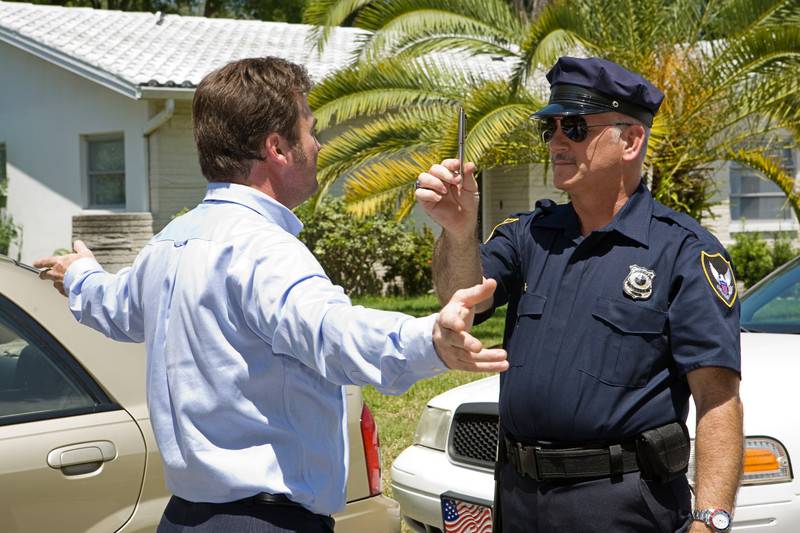
If the police officer lacked reasonable suspicion to pull you over, the traffic stop will likely be considered unlawful. In this case, you may seek to have any evidence resulting from the traffic stop suppressed. Your Wallin & Klarich DUI causing injury attorney will closely evaluate the facts of your case in order to determine whether the police officer had reasonable suspicion to stop you.
7. Probable Cause
A police officer may not arrest you without probable cause. To show probable cause, a police officer must prove that the facts and circumstances within his or her knowledge warrant the inference that you violated, are violating, or have violated an established law. One of our experienced DUI defense attorneys can prove that the police officer wrongly arrested you due to a lack of probable cause.
8. Faulty Testing Procedures
Breathalyzer and chemical tests may be subject to error if they are not administered properly. For example, a breathalyzer test will likely be inaccurate if the police officer forgot to recalibrate it prior to administering it. When you retain Wallin & Klarich, our Orange County DUI attorneys can help you win your case by showing that the results of a breathalyzer or chemical test were inaccurate.
9. Rising BAC Defense
If your BAC was close to 0.08% and you consumed your final alcoholic beverage just before getting pulled over, your DUI causing injury attorney can use “rising BAC defense.” Since alcohol takes time to metabolize in your body, consuming an alcoholic beverage will not immediately put you over the legal limit. Your BAC will gradually rise as the alcohol in your body begins to metabolize. Therefore, it is possible that you may have been under the legal limit while driving, but over the legal limit at the time of chemical test an hour later. You may not be convicted of a DUI causing injury under VC 23153(b) if your BAC was not 0.08% or higher when you drove the vehicle.
10. Mouth Alcohol
Another defense to an inaccurate breathalyzer reading is “mouth alcohol.” A breath test may be compromised by oral alcohol resulting from actions such as burping or belching. Mouth alcohol may also be caused by products such as mouthwash, cough syrup, and/or cold medicine.
11. Your Miranda Rights Were Not Read
If a police officer does not read you your Miranda Warning (i.e. right to remain silent), your DUI causing injury attorney may seek to have any incriminating statements suppressed. A police officer must give you your Miranda Warning following an arrest and/or prior to any interrogation by law enforcement agents.
Let Wallin & Klarich Make The Difference. Speak To An Orange County DUI Lawyer Today.

The Orange County DUI lawyers at Wallin & Klarich have over 40 years of experience handling VC 23153 cases. We provide the most effective and professional representation for each and every client. We will make sure that all available defenses are used to the fullest extent, thus providing you with the greatest opportunity to obtain a successful outcome in your case.
Call us at (877) 4-NO-JAIL or (877) 466-5245 or submit our intake form.